Step-By-Step Overview Of Educational Options, Campus Choices, And Trusted Regional Tutors Today

September 23, 2026 · 9 reads
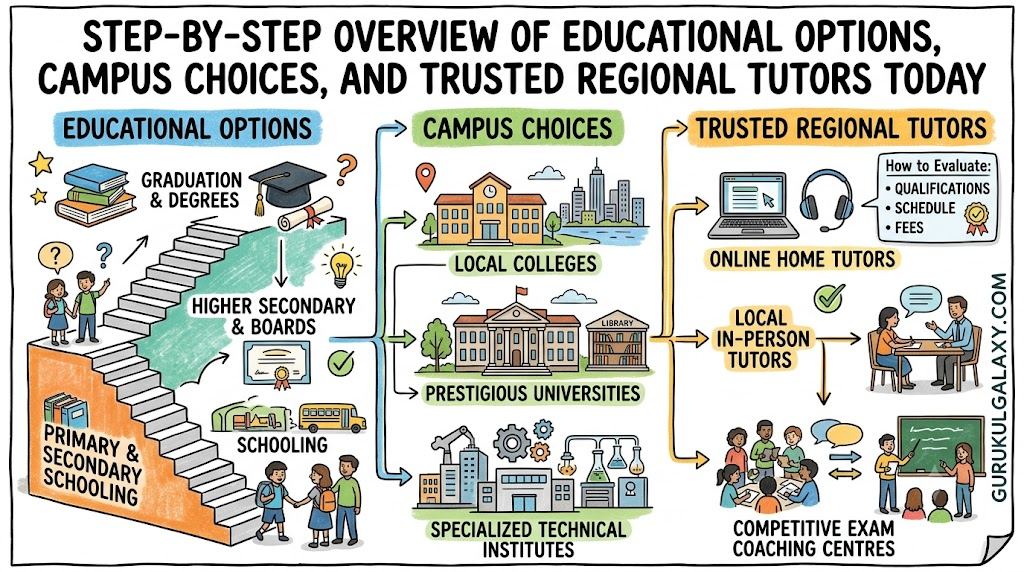
Introduction
Finding the right teacher, coaching class, college, or exam plan can feel very hard for parents and students across India today. Education choices carry big hopes, but families often feel lost because thousands of advertisements promise quick success without showing real facts. You might spend days asking friends for numbers, visiting crowded offices, or scrolling through random websites that offer confusing details. Without proper research, students can join classes that teach too fast or pick colleges that lack basic practical labs. Parents worry about spending their hard-earned money on programs that do not help their children grow into confident learners. Clear and honest education research solves this problem by giving you true facts about teacher skills, batch sizes, total fees, and classroom facilities before you make any final commitment. When you compare your options side by side, you protect your family savings and find learning spaces where you truly feel supported every single day. Modern discovery platforms like GurukulGalaxy.com make this journey smooth and stress-free by gathering verified teachers, top coaching hubs, colleges, and entrance exam guides in one simple place for everyone.
What is GurukulGalaxy.com
GurukulGalaxy.com is a dedicated education discovery website designed to help students, parents, and curious learners find the best learning support across India. The website brings together independent home tutors, digital educators, school coaching centres, higher education colleges, and major competitive exam details into one clean and searchable directory. Instead of searching across hundreds of disconnected web pages, you can explore detailed profiles that show what teachers teach, how long they have worked with students, and what fees they charge. Learners can read clear overviews of schools and universities, compare course subjects, and check hostel or laboratory facilities before visiting campuses in person. The platform also offers easy guidance on national entrance tests, explaining test patterns, eligibility rules, and key application dates in plain language. Parents can send direct enquiries to institutes and teachers to ask questions about study materials, batch sizes, and class timings without paying any middleman fees. By organizing verified educational information in a simple format, the platform helps every family discover the right educational path with complete trust and peace of mind.
Find Tutors Online
Many school students and learners now find tutors online because digital learning brings top-quality education straight into your home study room. Online classes remove the stress of travelling across busy roads in the heat or rain, leaving you with more energy to study and rest after school hours. When you search for an online educator, start by writing down the exact topics or chapters where you need clear explanations, whether in science, mathematics, or languages. Check how many years the teacher has spent working with students from your specific school board, such as CBSE, ICSE, or state boards. Look for mentors who use simple digital whiteboards, share neat summary notes, and ask friendly questions to make sure you follow along during live sessions. Make sure the class schedule matches your free evening hours so you never feel rushed between school homework and extra lessons. Discuss monthly tuition fees and payment rules with your parents before booking a trial class, and always set clear learning goals for the term. Here is a simple table to help you evaluate key tutor factors:
| Choice Factor | What to Look For | Why It Matters |
| Subject Match | Exact class and board topic | Ensures you learn the right syllabus |
| Class Timing | Fits your free evening hours | Prevents tiredness after regular school |
| Fee Range | Clear monthly cost | Helps your parents plan expenses |
| Demo Class | Free practice session | Lets you see the teaching style |
Online Tutors in India
The growing network of online tutors India allows students living in small towns and villages to learn directly from leading educators based anywhere in the country. This means you do not have to relocate or settle for limited local choices when tackling advanced school topics or entrance exam foundations. Good digital teachers share organized slide decks, solve difficult textbook problems step by step, and record every live class so you can rewatch tricky explanations later at night. You can pause lessons, replay tough science concepts, and write down neat notes at your own personal speed without feeling any pressure from fast classmates. Before starting your online classes, check that your home computer or mobile device has a steady internet connection and a quiet table space for daily study. Ask the instructor if they provide regular homework review and quick doubt resolution through message chats between scheduled lessons. Learning online with a patient subject guide makes studying fun, builds strong daily study discipline, and gives you the exact academic help you need to improve your exam marks.
Find Tutors Near Me
Even with many digital tools available today, thousands of families still prefer to find tutors near me so their children can receive direct, in-person attention. Learning face to face inside a room helps young learners stay focused because a physical teacher can see their notebook, correct calculation errors immediately, and notice when a child looks confused. When looking for a local tutor, check the travel distance between your home and the teacher’s study place, because long daily walks or bus rides leave young students exhausted. Find out whether the tutor holds lessons inside your family house or runs small teaching groups at a private neighborhood center. Pay close attention to the number of students sitting in each session, because batches with more than five or six kids make it difficult for the teacher to help everyone equally. Talk openly with the educator about their teaching experience, the monthly fee structure, and the schedule of weekly revision tests before you begin. Choosing a friendly local teacher who lives nearby ensures steady study habits, safe travel, and dependable academic progress throughout the whole school term.
Coaching Institutes Near Me
Parents often search for coaching institutes near me when students enter higher classes and need structured preparation for important board tests and school finals. A good local coaching institute provides a formal learning environment where students follow a steady syllabus plan alongside focused classmates who share similar academic goals. When you visit a local coaching centre, take a walk through the classrooms to check whether the benches are comfortable, the rooms have good lighting, and the study halls are free from street noise. Ask the centre head how many students they place in a single batch, because crowded rooms make it hard for quiet learners to raise hands and clear their doubts. Enquire whether the institute supplies its own printed study books, sample question banks, and weekly practice tests that follow current examination guidelines. You should also check if senior teachers remain available after regular lectures to explain difficult homework problems during dedicated doubt-clearing hours. Selecting an institute close to your house saves valuable travel time and gives you access to structured study materials and consistent teacher guidance.
Best Coaching Institutes in India
When preparing for major national examinations, families often research the best coaching institutes in India to find top teachers, proven study systems, and focused test routines. It is very important to evaluate these large organizations carefully rather than trusting colorful billboard advertisements, celebrity endorsements, or exaggerated rank claims seen on internet sites. High-quality institutes stand out by hiring experienced, permanent subject teachers who explain core textbook concepts clearly and teach smart problem-solving methods for competitive papers. You should examine the quality of their printed test series, mock exam papers, and classroom study booklets to ensure they match the latest examination patterns. Compare the total course fees, hostel expenses, and study material charges across three or four established institutes so your parents can plan family finances responsibly. Check whether the organization offers live online backup lectures and recorded video libraries so you never fall behind if you miss class due to illness. Visiting centres in person and speaking with current students gives you an honest picture of real classroom discipline and student care.
College Search India
Starting a systematic college search India is one of the most important steps for students finishing their secondary education and planning future professional careers. Begin your college research journey by identifying the specific academic streams and course subjects that spark your natural curiosity, whether you enjoy building machines, studying business finance, or creating digital artwork. Make a broad list of colleges that offer your chosen degree, and carefully read their published admission guidelines, minimum eligibility percentages, and required entrance examinations. Check the full fee structure for every single semester, including tuition charges, library fees, examination deposits, and hostel accommodation costs, so there are no sudden financial surprises later. Visit college campuses whenever possible to inspect science laboratories, computer workshops, libraries, sports grounds, and dining facilities with your own eyes. You should also enquire about the strength of their campus training cells and find out which companies visit the college to recruit young graduates into entry-level positions. Taking time to gather reliable facts ensures you pick a college that nurtures your skills and supports your life goals.
Compare Colleges and Courses
Students and parents should always compare colleges and courses using detailed practical factors rather than simply selecting an institution because of its popular name or glossy brochure pictures. Two colleges offering the exact same degree title might provide completely different practical training, laboratory access, faculty experience, and campus facilities. To make a balanced choice, create a side-by-side comparison chart that tracks total annual costs, distance from your hometown, transport safety, and mandatory campus attendance rules. Pay close attention to whether the college curriculum includes hands-on workshop training, industrial visits, and software skills that prepare you for modern workplace expectations. Check the teacher-to-student ratio to ensure professors have enough time to mentor individual student projects, research papers, and internship applications. You should also review student safety measures, hostel hygiene, and medical support facilities provided on campus grounds. Comparing these essential elements side by side prevents expensive mistakes and helps you invest your educational years into an institution that truly delivers high academic value.
| Comparison Factor | College A | College B | Why It Matters |
| Total Course Fees | Lower annual fee | Higher annual fee | Protects your family savings |
| Campus Location | Inside your home city | In another state | Affects travel and living costs |
| Lab Facilities | Modern computers and tools | Basic old equipment | Hands-on skill practice needs good tools |
| Placement Support | Active job training cell | Basic job notices board | Helps you start work after study |
Competitive Exams in India
Every year, millions of ambitious young learners prepare for major competitive exams in India to secure seats in prestigious degree colleges, training academies, and government careers. Unlike standard school tests where you write long descriptive answers for passing marks, competitive entrance papers use timed multiple-choice questions that test your deep conceptual clarity and problem-solving speed. Each national and state exam follows strict official rules regarding candidate age limits, academic qualifications, subject combinations, and minimum qualifying scores. You must download and read the official exam notification brochure carefully to learn the exact test structure, the number of sections, and the marking scheme. Many major tests use negative marking systems, which means incorrect answers will reduce your total score, making accuracy just as important as speed on test day. Keep a visible calendar in your study room to track important dates for application form releases, correction windows, admit card downloads, and final test dates. Understanding the full testing process early removes fear, builds focus, and helps you plan your weekly preparation with great clarity.
Real-Life Scenarios
- Scenario 1: Rohan struggled with Class 10 mathematics and felt nervous during weekly school tests because his classroom teacher moved through textbook lessons too quickly for him to follow. His parents searched online for a patient local tutor who had five years of teaching experience with the state board syllabus. Rohan attended two free trial sessions, connected well with the mentor’s simple step-by-step methods, and now solves geometry problems with steady confidence.
- Scenario 2: Priya completed Class 10 and wanted to prepare for national engineering entrance tests while continuing her regular senior secondary school studies. She visited three different coaching centres in her town to compare class sizes, printed notes, and weekly testing routines. She chose a well-run local centre located fifteen minutes from her house, saving two hours of daily travel time that she now uses for self-study and rest.
- Scenario 3: Amit finished Class 12 and searched for undergraduate colleges offering professional degrees in computer software development and animation design. He made a comparison list of four regional colleges, checked their computer laboratory equipment, and spoke with second-year students about campus projects. He selected an affordable college with modern computer labs and strong industry internship programs, ensuring he builds practical skills without taking heavy student loans.
Competitive Exam Preparation
Building a steady competitive exam preparation plan helps you master vast subject syllabi without suffering from mental fatigue, panic, or last-minute exam stress. Successful candidates rely on consistent daily routines, smart study resources, and disciplined revision cycles rather than irregular bursts of late-night cramming before tests. Here is a clear ten-step plan you can follow to structure your daily study habits for any major entrance test:
- Learn the official title, purpose, and career pathways linked to your chosen exam.
- Read the full eligibility criteria, age limits, and required school mark percentages carefully.
- Study the question paper blueprint, section divisions, time limits, and negative marking rules.
- Download the official syllabus document and list all required subjects and chapters in a notebook.
- Identify your difficult topics by solving a diagnostic sample paper before starting your lessons.
- Create a realistic daily study timetable that balances tough chapters, easy reading, and rest hours.
- Practice solving standard numerical problems and multiple-choice questions every single afternoon.
- Take full-length practice mock examinations under strict timed conditions every weekend morning.
- Review your incorrect answers thoroughly, identify your conceptual mistakes, and rewrite correct solutions.
- Record your weekly mock test scores in a progress chart to track your improving speed and accuracy.
Competitive Exams After 12th
Students approaching the end of their schooling should actively research competitive exams after 12th to find suitable degree pathways that match their personal talents and future career interests. Whether you are studying science, commerce, humanities, or vocational subjects, there are dedicated national entrance examinations designed for engineering, medicine, commercial law, design, hotel administration, and university admissions. Exploring these examinations during Class 11 and Class 12 helps you understand the required subject combinations and preparation standards well before the final school board rush begins. Check whether your target entrance tests happen through computer-based testing centers or traditional pen-and-paper formats, and practice using the appropriate test format at home. Read past question papers to understand how different testing bodies frame questions and combine concepts across multiple textbook chapters. Setting clear goals around two or three related entrance tests keeps your study efforts organized, reduces academic confusion, and ensures you submit complete, accurate application documents well before official registration deadlines close.
Common Mistakes to Avoid
- Choosing Classes Only by Lowest Price: Families often pick the cheapest available tuition without checking whether the teacher has real subject expertise or proper lesson materials, leading to wasted time and poor school results.
- Falling for Big Brand Names: Many students join famous coaching institutes with hundreds of students in a single hall, only to discover that the teachers cannot give personal attention or answer basic individual doubts.
- Skipping Educator Profile Verification: Parents sometimes hire private tutors without checking their educational qualifications, past teaching experience, or identity credentials, which creates safety and quality concerns inside the home.
- Ignoring Long Daily Travel Times: Enrolling in an institute located two hours away drains your physical energy, leaving you exhausted and unable to complete necessary self-study hours after returning home.
- Missing Official Eligibility Rules: Some candidates spend months studying for competitive tests only to discover later that they do not meet the minimum age, subject combination, or board percentage criteria.
- Trusting Unverified Online Claims: Students often believe internet advertisements that promise guaranteed top exam ranks or job offers without verifying the institution’s true track record and government accreditations.
- Failing to Compare Multiple Options: Many learners join the very first college or tuition centre they visit without writing down comparisons of fees, course content, faculty support, and student feedback across three options.
- Paying Full Fees Without Receipts: Handing over large sums of non-refundable cash without receiving a signed fee receipt, breakdown slip, and clear refund policy leaves families unprotected if classes stop unexpectedly.
- Studying Without the Official Syllabus: Preparing with random internet notes or outdated reference books without cross-checking the current official exam syllabus causes students to waste valuable time on irrelevant topics.
How GurukulGalaxy.com Can Help
GurukulGalaxy.com serves as a reliable, comprehensive education discovery companion that simplifies the search for quality learning across India by presenting clear and verified information. The platform allows parents and students to discover experienced home tutors and online educators based on exact subject requirements, board affiliations, and local neighborhood locations. You can explore a wide directory of coaching centres, comparing their batch sizes, fee ranges, study resources, and student support services without visiting dozens of separate commercial websites. College seekers can search through detailed institutional profiles, learning about academic departments, laboratory infrastructure, hostel accommodations, and degree offerings in plain language. The website also provides structured, easy-to-read guides for competitive exams, detailing syllabus breakdowns, eligibility conditions, and application schedules to keep your exam planning on track. With simple profile views and direct inquiry features, GurukulGalaxy.com empowers learners and parents to ask questions directly, verify essential educational facts, and make confident learning decisions without confusion.
A Simple Education Search Plan
Whenever you need to select a new teacher, coaching institute, or college, follow this practical seven-step roadmap to make a well-informed choice:
- Goal: Write down your precise educational need, including the exact subject, target examination, preferred study mode, and completion timeline.
- Search: Explore organized directories to discover educators and institutions that specialize in your specific academic level and chosen curriculum.
- Shortlist: Select three or four promising options that match your family’s budget, daily schedule, and travel distance requirements.
- Compare: Create a simple comparison sheet listing their course fees, faculty experience, batch sizes, study materials, and student reviews side by side.
- Ask: Contact each shortlisted option to ask specific questions about demo classes, doubt clearing, revision schedules, and fee refund rules.
- Verify: Visit the classroom or campus in person, check study materials and lab facilities, and speak with current students to confirm the claims.
- Decide: Choose the learning option that offers the best blend of personal attention, teaching quality, safety, and overall educational value.
Frequently Asked Questions
1. How can I pick the right online tutor for my school subjects?
Choosing the right online teacher begins with identifying your exact learning difficulties and academic goals for the school year ahead. Check the educator’s teaching experience, educational qualifications, and familiarity with your specific educational board, such as CBSE or ICSE. Request a trial lesson to observe how the teacher communicates, whether they use clear digital tools, and if they answer questions patiently. Ask about class timings, monthly fees, and whether they share summary notes and practice exercises after each session. Pick a teacher whose teaching style makes you feel comfortable, curious, and confident about learning challenging concepts.
2. Why do many parents prefer home tuition over large coaching classes?
Home tuition provides personalized one-on-one attention that allows the tutor to focus entirely on a single child’s unique learning pace and academic weaknesses. In a private home setting, students feel completely comfortable asking simple questions without worrying about feeling shy or embarrassed in front of competitive peers. The instructor can easily adapt lesson plans, spend extra time on difficult chapters, and assign customized homework tasks that match school deadlines. Furthermore, home tuition eliminates daily travel stress, keeping students safe at home while allowing parents to directly observe teaching quality, regular attendance, and steady academic improvement week after week.
3. Why is it essential to compare coaching institutes before paying fees?
Coaching centres vary widely in their teaching standards, classroom batch sizes, study material quality, and fee structures across different neighborhoods. Visiting and comparing multiple institutes allows families to identify transparent pricing, realistic student-to-teacher ratios, and well-maintained study spaces rather than falling for aggressive marketing tactics. You can review the actual study books provided, check whether senior teachers handle daily batches, and learn how the centre handles student doubts. Speaking with multiple institutes ensures you do not overpay for crowded classrooms, helping you select a supportive learning environment that truly helps your child succeed academically.
4. When should high school students begin their college search process?
Students should ideally begin their college search at the start of Class 11 or early in Class 12 to ensure sufficient time for thorough research. Early planning gives families ample time to explore diverse course options, compare total multi-year tuition and living costs, and understand specific entrance exam requirements. It prevents last-minute panic during final board examinations and ensures that critical registration deadlines for national entrance tests and university admissions are never missed. Starting early also allows students to visit college campuses, attend education fairs, and speak with alumni to make calm, well-considered career decisions.
5. What key details should you examine in a college profile?
When reviewing a college profile, verify official recognition, university affiliations, and national accreditation ratings to ensure the degree holds genuine professional value. Examine the complete fee structure, including tuition, laboratory fees, examination charges, and hostel accommodation expenses, so your family can budget properly. Inspect the quality of specialized science laboratories, computer centres, campus libraries, and workshop tools needed for hands-on skill development in your chosen stream. Finally, check the activity of the campus placement cell, review recent graduate hiring reports, and investigate student safety, hostel cleanliness, and available campus medical care.
6. Can an average student clear competitive exams in India?
Any dedicated student can succeed in competitive entrance examinations by maintaining steady study habits, disciplined revision, and deep conceptual clarity. Competitive tests evaluate fundamental textbook concepts rather than memorized answers, meaning that consistent practice and clear understanding matter far more than natural brilliance. By breaking down the official syllabus, solving chapter-wise questions daily, and taking regular timed mock tests, students can steadily improve their speed and problem-solving accuracy. Staying disciplined, learning from past test mistakes, and following a balanced daily routine allows any hardworking learner to achieve outstanding marks in major national examinations.
7. Which competitive entrance tests are popular after Class 12?
Students completing Class 12 can explore diverse national and state entrance tests depending on their chosen academic streams and long-term career aspirations. Science students commonly prepare for engineering entrance examinations like JEE Main or medical tests such as NEET to secure undergraduate professional seats. Commerce and humanities students often take entrance tests for five-year integrated law programs like CLAT, management aptitude tests like IPMAT, or central university entrance tests like CUET. There are also specialized national exams for design, fashion technology, hotel management, and defense services, offering exciting career pathways for every student interest.
8. How do regular mock tests improve final exam performance?
Taking regular mock tests under timed conditions trains students to handle the intense pressure, clock management, and mental focus required during actual examinations. Mock tests help you understand which question sections take too long, allowing you to refine your pacing strategy and avoid spending excessive time on difficult problems. Analyzing your mock test results reveals recurring conceptual errors, calculation slips, and neglected syllabus topics so you can fix them during weekly revision sessions. Over time, taking consistent practice tests reduces exam anxiety, builds emotional resilience, and gives you strong confidence when walking into the examination center.
9. Is it possible to prepare for entrance exams through self-study?
Preparing for entrance exams through self-study is entirely possible and has helped thousands of disciplined students achieve exceptional results without expensive commercial coaching. Self-study allows learners to follow standard national textbooks, set customized daily study schedules, and master difficult chapters at their own natural learning speed. Students can utilize free digital lectures, download official past exam question papers, and join affordable online test series to measure their ongoing preparation level. With dedicated daily reading time, regular self-testing, and strong personal discipline, independent learners can master exam concepts thoroughly and score exceptionally well on test day.
10. How does a small batch size benefit learners in a classroom?
Small batch sizes ensure that classroom teachers can observe each student’s daily work, track their individual learning speed, and provide immediate personal feedback. In smaller groups, teachers notice when a child struggles with a particular formula or concept and can pause the lesson to explain the idea again. Students find it much easier to participate in classroom discussions, ask clarifying questions without hesitation, and build meaningful academic relationships with their instructors. Furthermore, smaller classrooms have significantly less background noise and fewer behavioral distractions, creating a calm, productive atmosphere where everyone can stay focused on the lesson.
11. What is the safest procedure for paying coaching and tuition fees?
The safest way to pay educational fees is through traceable digital methods, such as direct bank transfers, official UPI payment gateways, or crossed bank cheques. Always insist on receiving a stamped, itemized fee receipt that clearly displays the total amount paid, the student’s name, the course name, and the remaining balance. Read the institute’s written fee terms carefully to see whether extra charges apply for study books, uniform sets, test series, or laboratory usage. Additionally, always check the written refund policy to understand what portion of the fee is returned if a student must leave.
12. How does an education discovery portal help modern families?
An education discovery website saves parents and students countless hours of frustrating research by organizing verified educational information into one clear, easy-to-navigate directory. Families can effortlessly compare private tutors, coaching hubs, and higher education colleges based on course offerings, fee ranges, classroom facilities, and exact neighborhood locations. The platform provides transparent, structured details without sales pressure, allowing parents to review options calmly and make sound financial decisions. By offering direct contact channels and exam overviews, an education discovery site bridges the gap between ambitious learners and quality educators across the country.
Conclusion
Finding the right educational path begins by defining your personal study goals, understanding your strengths, and researching your options with care. Take the time to explore multiple tutors, coaching institutes, and colleges rather than rushing into choices based on colorful advertisements or neighborhood rumors. Write down comparisons of total fees, batch sizes, faculty experience, and travel convenience on a simple sheet of paper so your whole family can evaluate choices together. Reach out directly to educators, visit physical study spaces, and ask every practical question necessary to verify safety, study material quality, and student support. Remember that the best learning environment is always the one that matches your personal pace, respects your curiosity, and encourages you to grow with confidence. Helpful platforms like GurukulGalaxy.com make this discovery process transparent, smooth, and accessible for students and parents across the country. Start your education research with clear facts today, stay dedicated to your daily studies, and build a rewarding academic journey that leads toward a bright future.
Leave a Reply