Finding Wonderful Travel Freedom Through Comprehensive Japanese Vehicle Rentals

October 17, 2026 · 14 reads
Introduction
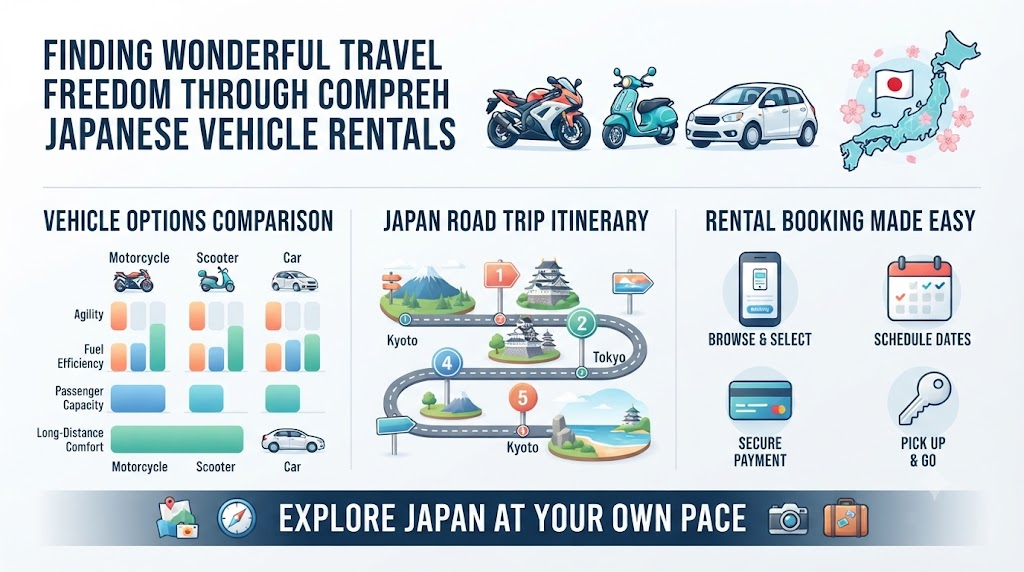
Japan has fast bullet trains, but trains cannot reach every hidden mountain spot. Many visitors look for a motorcycle rental Tokyo option to travel freely. Riding gives you fresh air and lets you stop whenever you want. You can see small farms, quiet ocean roads, and tiny noodle shops. Others search for a motorcycle rental Japan service to tour the whole country. You can also pick a small car for family trips. Planning ahead helps you find the best vehicle for your holiday. MotoShare Japan works as an online website where riders find and book vehicles from local rental partners. This guide explains how rentals work so you can travel with complete peace of mind.
Why Rent a Bike or Car in Japan?
Rental vehicles give you total control over your daily holiday schedule. You do not need to run for the last evening train. Solo riders can take light motorbikes through scenic mountain passes. Small groups can pack their bags into a family car. Cars keep you dry when it rains, but bikes make parking much easier. Always carry your home driver license and your International Driving Permit. Japan drives on the left side of the road, so stay alert.
レンタルバイク 東京 [Motorcycle Rental in Tokyo]
Tokyo is a huge city with many great roads. Finding a レンタルバイク 東京 service lets you ride past famous city towers. First, pick a bike size that fits your body and skill. Look at the total daily rental price before you book. Check the shop location so you can pick up the bike easily. Choose your pickup and return dates with care. You must show a valid driver license and pay a security deposit. A deposit is money held by the shop in case of damage. Check the fuel rules because most shops want a full tank upon return. MotoShare lets you compare different local bikes online so you make a smart choice.
Key Things to Inspect
Look over this quick guide before you pick up any vehicle.
| Check | Why It Matters |
| Driver License | You cannot rent any vehicle without legal driving papers. |
| Body Scratches | Finding marks early stops the shop from charging you later. |
| Brake Levers | Working brakes keep you safe on busy roads. |
| Helmet Fit | A snug helmet protects your head if you fall. |
| Fuel Tank Level | You must know if the tank has full fuel. |
スクーターレンタル 東京 [Scooter Rental in Tokyo]
A small scooter is great for zipping across crowded city streets. Searching for a スクーターレンタル 東京 option helps you beat heavy traffic. Scooters use very little fuel, and they fit into tight parking slots. Beginners should choose a light 50cc or 125cc scooter. Always test the hand brakes and the throttle before you leave the shop lot. Check the tire rubber for cuts or low air. Take clear photos of all body panels so you have proof of older scratches.
東京 バイク レンタル 安い [Cheap Motorcycle Rental in Tokyo]
Many riders look for a 東京 バイク レンタル 安い deal to save their holiday money. A low daily rate does not always mean the cheapest total bill. Extra costs can hide inside protection fees, toll cards, and gear rentals. Some shops charge high fees if you return the bike one hour late. Look at the whole price before you pay any money.
Price Details to Review
Review these common costs to protect your travel budget.
| Cost Item | What to Check |
| Daily Rate | Check the basic fee for each 24-hour block. |
| Damage Deposit | Ask if the shop returns this cash right away. |
| Late Return Fee | Find out the penalty price for missing your return time. |
| Safety Insurance | See what the policy covers if an accident happens. |
| Helmet Hire | Ask if protective riding gear costs extra coins. |
レンタルバイク 日本 [Bike Rental in Japan]
You can rent motorbikes far beyond the borders of the capital city. Looking for a レンタルバイク 日本 service helps you explore diverse islands. Kyoto offers calm rides past ancient wooden temples and bamboo groves. Hokkaido has wide farm highways that feel open and quiet during cool summer months. Okinawa gives you bright coastal views and warm ocean air. Keep in mind that local rules change between different rental partners. Some country shops close early, so plan your fuel stops with care.
Motorcycle Rental Japan
Booking your ride across Japan is very easy when you follow simple steps. First, pick the city you want to visit on your trip. Next, select your travel dates and pick a vehicle that fits your bag. Read the online listing carefully to know every single rule. Check the final price, the required deposit, and your license papers. Walk around the bike with the shop staff and mark every small scratch. Ride safely, obey all road signs, and return the vehicle on time with a full tank.
レンタカー 東京 [Car Rental Tokyo]
Sometimes two wheels are not enough for your travel party. Booking a レンタカー 東京 vehicle works best when you travel with children or older grandparents. A car trunk holds multiple large suitcases with ease. But driving in central Tokyo requires extra care because streets are narrow. Parking spots can cost a lot of money near train hubs. Choose a compact car so you can turn corners without stress.
Real-Life Scenarios
- A solo photographer rents a 250cc bike in Tokyo to shoot Mount Fuji at sunrise without waiting for morning buses.
- A family of four rents a compact wagon to visit mountain parks with three large suitcases and a baby stroller.
- A couple hires a 125cc scooter to hop between cafes and art museums across central Tokyo without paying train fares.
- Two friends rent touring bikes in Hokkaido to ride across flower fields during a week-long summer vacation.
How MotoShare Helps Rental Customers
The website motoshare.jp acts as an online marketplace for travelers. It connects riders directly with verified local vehicle owners and shops. You can search by town, pickup date, and vehicle style from your computer or phone. The system shows motorcycles, small scooters, and passenger cars in one clean spot. You can compare real prices, read clear rules, and book your rental without language troubles.
Rental Management System
Running a vehicle shop requires careful daily organization. Shop owners search for a バイクレンタル 管理システム to keep track of their motorbikes. Others look for a レンタカー 管理システム to manage car fleets. Good software helps owners track bookings, customer IDs, and security deposits in one screen. It shows which vehicles sit ready for pickup and which ones need fresh oil. Owners can also see clear profit charts and print legal agreements with zero paperwork stress.
Common Mistakes to Avoid
- Forgetting an International Driving Permit leaves you stranded at the counter without a vehicle. Always get this booklet in your home country before your flight departs.
- Choosing a heavy motorcycle that exceeds your physical skill makes parking on steep city slopes scary. Pick a light bike you can balance easily with both feet flat.
- Skipping the initial photo check leads to unfair damage bills later. Snap close photos of all old scratches before you turn the key.
- Ignoring expressway toll rules forces you to stop at busy cash gates. Rent an electronic toll card from the counter to pass gates without stopping.
- Returning the vehicle with an empty gas tank brings high shop fees. Fill up the tank at a station near the return shop and keep your paper receipt.
- Parking your bike on normal city sidewalks brings quick fines and police locks. Always park inside marked bicycle and motorcycle bays.
- Forgetting warm riding gear leaves you freezing on high mountain passes. Pack a windproof jacket and warm gloves even during mild summer tours.
- Missing the agreed return cutoff time creates costly late penalty fees. Always start your trip back early to account for sudden highway traffic jams.
Frequently Asked Questions
1. What papers do I need to rent a vehicle in Japan?
You need your original passport and your valid home driver license. You also need an International Driving Permit based on the 1949 Geneva Convention. Travelers from countries like Germany, France, and Switzerland must bring an official Japanese translation instead. Counter staff will photocopy these papers before handing over the keys. Without these documents, shops cannot rent you any vehicle under local law.
2. Can beginners safely ride a scooter in Tokyo?
Yes, beginners can ride scooters if they pick light 50cc models and stay in slower lanes. Tokyo drivers are polite, but downtown traffic moves quickly. You should practice starting, braking, and turning in an empty side street first. Watch out for delivery vans, city buses, and opening taxi doors. Always keep both hands on the handlebars and obey every single traffic light.
3. How much money does a security deposit usually cost?
Most rental shops ask for a security deposit to cover accidental damage or unpaid tolls. This fee usually ranges between 10,000 yen and 50,000 yen depending on the vehicle size. Most shops freeze this amount on your credit card instead of taking hard cash. The shop releases your money soon after you bring the vehicle back in good shape.
4. What side of the road do people use in Japan?
Vehicles in Japan drive on the left side of the road. The driver sits on the right side of a rental car. Turning right across oncoming traffic feels strange for many foreign visitors at first. Go slowly through intersections and follow the painted white arrows on the street pavement. Pedestrians always have the right of way at marked zebra crossings.
5. Do I need to buy extra insurance for my rental?
Basic insurance usually comes with your daily rental price, but it often carries high deductibles. A deductible means the cash amount you must pay out of pocket during an accident. Buying optional collision coverage lowers this surprise fee down to zero. We suggest buying complete protection so you do not stress over small car dents or cracked bike mirrors during holiday rides.
6. Where can I find safe parking for a motorcycle?
You cannot park your motorcycle on public pedestrian walkways in Japanese cities. Police officers write expensive parking tickets very fast. Look for green parking signs with two-wheel pictures near train stations and department stores. Many underground parking garages also welcome mid-sized bikes for a small hourly coin fee. Ask your hotel clerk about parking spaces before you book your overnight room.
7. What happens if I return the bike with an empty tank?
Rental agreements state that customers must return vehicles with a completely full tank of fuel. If you forget to buy gas, the shop staff will charge you for the missing liters. Their in-house fuel prices cost much more than normal roadside gas stations. Always stop at a filling station within five kilometers of the shop and keep the printed paper receipt.
8. Can I rent a helmet and riding gloves at the counter?
Most bike rental partners offer helmet and glove rentals for an extra daily price. You can choose between open-face helmets and full-face helmets that protect your chin. Counter staff clean each helmet between trips, but bringing your own gloves ensures a proper hand fit. Check with the shop during your online booking to make sure they have your exact helmet size.
9. Are highway tolls expensive to use across Japan?
Expressway tolls in Japan are quite costly compared to many western countries. Driving across the country on toll roads can add up to several thousand yen each day. You can rent an Electronic Toll Collection card from your rental shop counter. This card plugs into the vehicle and lets you pass through purple toll gates without stopping to pay physical coins.
10. Can I pick up a vehicle in Tokyo and return it in Kyoto?
Some large rental operators offer one-way drop-offs, but they charge an extra drop fee for the service. Returning a bike to a different shop requires special planning by the company staff. Smaller local partners usually want their vehicles returned back to the original counter. Check the drop-off rules on the booking website before you plan a long cross-country trip.
11. What fuel type do Japanese rental vehicles take?
Most passenger cars and four-stroke motorcycles run on regular unleaded gasoline, which pumps from red fuel nozzles. High-performance sport bikes might require premium high-octane gasoline from yellow pump handles. Diesel fuel comes from green nozzles and works only in diesel engines. Putting the wrong fuel into your tank ruins the motor, so check your fuel cap sticker carefully before pumping.
12. How does a rental management system help shop owners?
A rental management system automates booking calendars and tracks customer agreements in one clean digital tool. It stops accidental double-bookings when many tourists reserve vehicles at the same time. The software saves scanned driver licenses, logs security deposits, and reminds mechanics about upcoming oil changes. Owners save daily office hours and can view clear profit reports without searching through messy paper stacks.
Conclusion
Renting a vehicle in Japan turns an ordinary vacation into an unforgettable road journey. You can choose between nimble city scooters, roaring highway bikes, and comfortable family cars. Make sure you check all rental costs, security deposits, and fuel rules before you sign your paper agreement. Always inspect the vehicle for old marks and ride with complete road caution. Rental shops can use modern management software to track their fleets and serve travelers faster. Platforms like MotoShare help connect eager riders with trusted local rental partners for a smooth holiday start. Now you have the facts to pick your ride, pack your gear, and enjoy Japan.
Leave a Reply