Comprehensive Guide to Selecting Orthopedic Hospitals and Knee Replacement Surgeons

September 12, 2026 · 19 reads
Introduction
Experiencing persistent joint stiffness can disrupt your everyday life, making simple steps feel painful and exhausting. However, severe discomfort does not mean that major surgery is inevitable. Choosing the right care facility requires careful, methodical research across multiple critical medical factors. Patients should compare experienced orthopedic teams, facility safety track records, modern surgical options, clear cost estimates, and structured rehabilitation programs. Because knee joint anatomy is complex, exploring non-surgical treatments first often protects long-term joint health. Dedicated discovery platforms like KneeHospitals simplify this evaluation journey by presenting verified clinical facilities, specialist credentials, and practical recovery insights in one transparent, easy-to-navigate space.
What Is KneeHospitals.com?
KneeHospitals.com functions as an informational healthcare directory and educational discovery platform designed specifically for individuals seeking specialized knee joint care. The portal organizes vital details regarding orthopedic centers, credentialed surgeons, joint procedures, rehabilitation pathways, medical travel hubs, and typical expenditure frameworks. By presenting structured clinical profiles alongside procedure overviews, the platform enables patients and caregivers to conduct thorough preliminary research from home. Most importantly, the platform serves purely as an independent educational guide, meaning it does not dispense clinical diagnoses, recommend specific commercial implants, or replace individualized, face-to-face consultations with licensed medical professionals.
Why Use KneeHospitals.com When Researching Knee Treatment?
Hospital Discovery
Patients can quickly filter and shortlist verified orthopedic centers according to surgical infrastructure, accreditation levels, intensive care availability, and dedicated joint replacement wings.
Doctor and Surgeon Research
Reviewing verified credentials, subspecialty training, and annual procedure volumes ensures patients connect with clinicians who regularly perform specific joint preservation or reconstruction techniques.
Procedure Education
Clear clinical explanations break down sophisticated surgical concepts, helping individuals grasp the procedural steps, realistic risks, and distinct benefits of varying joint treatments.
Destination Comparison
Evaluating treatment centers across different metropolitan cities allows families to balance specialized clinical expertise with essential travel logistics, local accommodation, and accessible postoperative follow-up care.
Cost Research
Accessing preliminary pricing frameworks helps patients prepare sensible medical budgets, though every individual must verify final itemized quotations directly with their chosen hospital administration.
What Is Knee Replacement Surgery?
When progressive arthritis or physical trauma severely degrades articulating cartilage, Knee Replacement Surgery provides a proven pathway toward restoring mobility and alleviating chronic pain. Orthopedic specialists assess joint deterioration using weight-bearing digital X-rays, detailed physical examinations, and patient symptom histories. Conservative therapies—including physical rehabilitation, lifestyle adjustments, and anti-inflammatory regimens—are routinely exhausted before surgical intervention is contemplated. During the procedure, damaged cartilage and underlying bone surfaces are resurfaced and fitted with precision metal and high-density polyethylene components to recreate functional, low-friction joint motion.
Total Knee Replacement vs Partial Knee Replacement
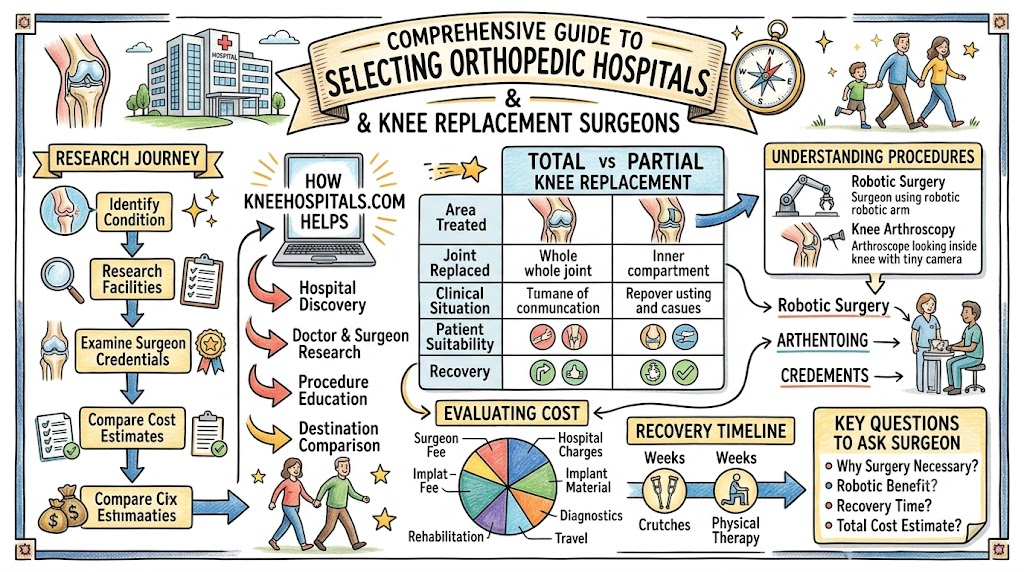
Orthopedic surgeons evaluate joint degeneration to decide whether Total Knee Replacement or Partial Knee Replacement best serves a patient’s specific anatomical condition. Total arthroplasty addresses generalized, multi-compartment arthritis by replacing all three anatomical compartments of the knee joint, offering long-lasting stability for widespread degeneration. Conversely, partial unicompartmental resurfacing targets localized damage within a single compartment, sparing healthy ligaments, bone stock, and natural joint proprioception. Neither clinical approach is universally superior; accurate surgical candidacy depends entirely on disease distribution, ligamentous integrity, bone density, age, and individual functional demands.
| Comparison Parameter | Total Knee Replacement | Partial Knee Replacement |
| Area Treated | Entire knee joint across all affected compartments | Single diseased compartment (medial, lateral, or patellofemoral) |
| Amount of Joint Replaced | Complete joint articulation resurfaced | Only worn compartment resurfaced; healthy bone spared |
| Typical Clinical Situation | Advanced osteoarthritis, diffuse joint erosion, severe deformity | Isolated compartment damage with intact cruciate ligaments |
| Patient Suitability | Severe multi-compartment pain and global joint wear | Localized pain without inflammatory joint disease |
| Recovery Considerations | Comprehensive rehabilitation; typical recovery across 6–12 weeks | Quicker post-op mobilization; typical recovery across 3–6 weeks |
| Decision-Making Factors | Systemic arthritis, inflammatory disease, complex angular deformity | Specific cartilage wear, stable joint ligaments, normal body weight |
What Is Robotic Knee Replacement Surgery?
Modern surgical centers increasingly utilize Robotic Knee Replacement Surgery to assist orthopedic surgeons in achieving exceptional implant alignment and customized soft-tissue balancing. It is vital to understand that an automated machine never operates independently; rather, the seasoned surgeon controls every operative instrument throughout the entire procedure. Advanced computer software and dynamic robotic arms utilize three-dimensional imaging to map individual joint anatomy down to fractions of a millimeter. While this surgical technology provides remarkable planning accuracy, it may entail higher hospital facility charges and requires rigorous consultation regarding whether its specific advantages align with your anatomical needs.
What Is Knee Arthroscopy?
As an established minimally invasive intervention, Knee Arthroscopy allows orthopedic specialists to visualize, diagnose, and treat intra-articular problems through tiny keyhole incisions. Using a miniaturized camera alongside specialized micro-instruments, surgeons can trim torn meniscus tissue, remove loose cartilage fragments, or reconstruct damaged ligaments without wide open surgical exposure. Unlike major joint arthroplasty, arthroscopy does not resurface degraded bone surfaces, rendering it largely ineffective for diffuse, advanced bone-on-bone osteoarthritis. Patients generally experience minimal blood loss, minimal scarring, and rapid outpatient recovery, returning to baseline physical activities within a few short weeks.
Understanding Knee Pain Treatment Before Surgery
Surgical intervention represents only one facet of comprehensive orthopedic practice, with conservative Knee Pain Treatment forming the foundation of joint management. Targeted physical therapy builds quadriceps and hamstring strength to offload biomechanical stress from the vulnerable joint capsule. Weight management, gentle low-impact conditioning, temporary offloader braces, and doctor-prescribed anti-inflammatory medications can provide profound symptomatic relief. Furthermore, image-guided hyaluronic acid or corticosteroid injections can temporarily calm chronic joint inflammation. Surgery becomes a sensible discussion only when conservative non-operative measures fail to preserve personal mobility and restful sleep.
How Much Does Knee Replacement Surgery Cost?
Understanding overall Knee Replacement Surgery Cost involves evaluating several interrelated procedural and institutional components rather than searching for a single flat rate. Major cost drivers include hospital geographic location, surgeon professional honorariums, selected implant materials, room category selections, pre-operative cardiac clearance, imaging, and modern robotic assistance. Additionally, inpatient medications, dedicated nursing care, continuous postoperative physical therapy, and required follow-up consultations shape total spending. International and out-of-town travelers must also budget for companion transit, prolonged hotel stays, and unforeseen contingency care, making thorough upfront administrative verification an absolute necessity.
| Cost Factor | Why It Matters |
| Surgeon Fee | Reflects subspecialty training, surgical experience, and case complexity |
| Hospital Charges | Encompasses operating theater time, sterile facilities, and chosen room level |
| Implant Selection | Distinct alloy compositions and specialized designs carry different pricing structures |
| Technology Usage | Computer navigation tools and robotic equipment introduce specialized facility fees |
| Diagnostics | Pre-operative imaging, laboratory workups, and clearance tests are billed individually |
| Rehabilitation | Supervised physiotherapy sessions represent essential ongoing investments for recovery |
| Travel & Logistics | Out-of-station transit, local lodging, and companion care expand total expenditures |
| Complications | Extended hospital stays, additional medications, or unexpected care alter final costs |
How to Choose the Best Knee Replacement Hospitals
Identifying Best Knee Replacement Hospitals requires moving past marketing slogans to examine objective clinical criteria that directly influence patient safety and procedural outcomes. First, verify surgeon case volume and specific board certifications to ensure deep procedural familiarity. Second, confirm the hospital features dedicated orthopedic operating theaters, advanced laminar airflow systems, and on-site intensive care units. Third, prioritize facilities offering comprehensive in-house rehabilitation, open pricing structures, transparent infection control benchmarks, and responsive patient communication channels. A genuinely top-tier medical institution supports patients seamlessly from initial clinical workups through long-term home recovery.
How KneeHospitals.com Can Help During the Research Process
Patients navigating complex clinical pathways can use the platform as a structured educational roadmap by following these practical sequential stages:
- Document specific daily symptoms, movement restrictions, and functional pain thresholds.
- Gather all recent diagnostic imaging films, physical examination summaries, and clinical reports.
- Review detailed educational procedural guides to understand diverse surgical and non-surgical approaches.
- Search accredited medical facilities according to location, department infrastructure, and clinical capabilities.
- Examine orthopedic specialist profiles, assessing their specific procedural focus and surgical background.
- Request formal in-person or remote clinical evaluations from shortlisted medical centers.
- Compare professional surgical opinions, proposed implant designs, and recommended treatment pathways.
- Analyze comprehensive cost estimates across pre-operative, surgical, and postoperative phases.
- Prepare home recovery spaces, identify family caregiving support, and map out physical therapy resources.
- Establish clear follow-up timelines and emergency contact pathways with the chosen hospital team.
Real-Life Scenarios: How Patients Can Think Through the Decision
- A moderately active adult with localized cartilage erosion confined strictly to the inner compartment, intact anterior cruciate ligaments, and persistent pain might explore targeted unicompartmental resurfacing rather than a total joint replacement.
- An older individual experiencing generalized bone-on-bone osteoarthritis across the entire joint, accompanied by angular deformity and night pain unresponsive to medications, should reasonably consult high-volume arthroplasty centers regarding comprehensive total joint reconstruction.
- An individual suffering from acute joint catching or a mechanical meniscal flap tear, but showing zero underlying structural arthritis on imaging, is generally an ideal candidate for minimally invasive arthroscopic evaluation rather than bone resurfacing.
- A patient facing complex medical comorbidities, such as cardiovascular disease or diabetes alongside severe joint degeneration, requires a multispecialty tertiary hospital with advanced critical care support rather than an isolated boutique surgical clinic.
Questions to Ask Before Knee Replacement Surgery
- What specific diagnostic findings confirm that joint replacement is necessary right now?
- Have all reasonable conservative, non-surgical therapy options been exhausted?
- Am I an anatomical candidate for partial joint resurfacing, or is total arthroplasty recommended?
- Which specific implant design and material combination do you intend to use, and why?
- Do you recommend standard manual instrumentation, computer guidance, or robotic assistance for my anatomy?
- What are the most common procedural risks, infection rates, and potential complications in this facility?
- What is the anticipated duration of my hospital stay, and when does physical rehabilitation begin?
- What milestone exercises must I achieve before safely returning to driving, walking unassisted, and working?
- What is the comprehensive, itemized financial estimate including implants, anesthesia, nursing, and recovery care?
- How are emergency postoperative concerns, dressing changes, and physical therapy sessions managed following hospital discharge?
How to Use KneeHospitals.com More Effectively
Creating an organized comparison worksheet helps patients evaluate multiple healthcare institutions objectively before committing to surgical appointments. Cross-referencing hospital capabilities against clinical requirements prevents costly misunderstandings and ensures comprehensive care continuity. By taking systematic notes regarding specialist experience, technology availability, itemized pricing, and postoperative therapy networks, families transform overwhelming medical decisions into manageable, rational choices. The following framework provides an effective template for shortlisting prospective orthopedic centers during your initial discovery phase.
| Comparison Area | What to Check |
| Hospital | Accreditation status, dedicated orthopedic operating suites, infection rates, and ICU facilities |
| Surgeon | Board certifications, fellowship credentials, annual procedure volumes, and revision experience |
| Treatment | Exact surgical approach proposed, alternative options considered, and anatomical justification |
| Technology | Availability of manual instruments, intraoperative computer navigation, or robotic assistance systems |
| Cost | Itemized estimates covering surgeon fees, implants, room categories, medications, and diagnostics |
| Recovery | Expected inpatient stay, protocol-driven physical therapy schedules, and mobility milestones |
| Follow-Up | Scheduled wound reviews, teleconsultation availability for remote patients, and emergency hotlines |
| Travel | Proximity to transit hubs, companion lodging arrangements, and airport transfer support |
| Safety | Hospital-wide patient safety measures, blood bank access, and rapid emergency intervention capacity |
Common Mistakes to Avoid
- Selecting an orthopedic hospital based purely on proximity or commercial advertisements without checking surgeon procedure counts.
- Choosing a major surgical intervention before completing a dedicated trial of conservative non-surgical management.
- Comparing hospital estimates based solely on base package rates while ignoring diagnostics, implants, and physical therapy.
- Overlooking the vital role of daily postoperative physical therapy in achieving proper joint flexion and extension.
- Assuming that advanced robotic systems eliminate the need for a highly skilled, experienced primary surgeon.
- Neglecting to arrange reliable home assistance, bathroom modifications, and transport for the initial post-discharge weeks.
- Failing to optimize systemic pre-existing health conditions, such as poorly managed blood sugar levels or high blood pressure.
- Rushing into surgery without seeking a clarifying second clinical opinion from an independent orthopedic specialist.
Frequently Asked Questions
1. How long does a modern knee implant typically last?
Contemporary orthopedic joint replacements are exceptionally durable, with high-quality polyethylene and advanced metal alloys functioning reliably for twenty years or longer in roughly ninety percent of patients. Longevity depends heavily on proper surgical alignment, patient body weight, physical activity habits, and strict avoidance of high-impact sports that accelerate mechanical component loosening.
2. Can I walk immediately after knee replacement surgery?
Under modern accelerated recovery protocols, physical therapists generally assist patients to stand and take several steps using a walker within twelve to twenty-four hours after surgery. Early, controlled ambulation promotes healthy blood circulation, dramatically reduces the risk of deep vein thrombosis, and encourages essential early joint flexion.
3. How do I know if I need total or partial replacement?
Determining procedural suitability requires detailed clinical examinations and standing X-rays to assess cartilage loss. If arthritis is isolated strictly to a single joint compartment and your ligaments are structurally sound, partial replacement may be appropriate; otherwise, generalized multi-compartment wear necessitates a comprehensive total joint reconstruction for lasting stability.
4. Is robotic knee surgery completely performed by a machine?
No, robotic surgical equipment never operates autonomously or makes independent surgical incisions. The qualified orthopedic surgeon maintains absolute tactile control over every instrument, utilizing computerized software and robotic guidance arms merely as high-precision navigational aids to refine bone cuts and balance surrounding soft tissue according to your unique anatomy.
5. What are the major risks associated with knee arthroplasty?
While joint replacement is routine and highly successful, potential risks include surgical site infections, deep vein blood clots, persistent stiffness, implant loosening, neurovascular injury, and ongoing residual pain. Thorough pre-operative medical screening, strict operating room sterility protocols, and diligent postoperative rehabilitation work collaboratively to keep complication rates exceptionally low.
6. How much time off work will I need for recovery?
Recovery timeframes depend significantly on your workplace demands and physical healing speed. Individuals with sedentary desk-based jobs can frequently resume light duties within four to six weeks post-surgery. Conversely, professionals whose roles demand rigorous physical labor, continuous walking, or heavy lifting generally require ten to twelve weeks of focused rehabilitation.
7. What does KneeHospitals.com charge patients to use its directory?
The platform serves as an open educational and discovery portal that patients and caregivers can browse free of charge. It provides transparent access to hospital overviews, surgeon directories, procedure explanations, and cost considerations, allowing individuals to educate themselves thoroughly before initiating direct contact with licensed healthcare providers.
8. How painful is the postoperative rehabilitation process?
Postoperative discomfort is completely normal, but modern multimodal pain management—incorporating localized nerve blocks, anti-inflammatory medications, and cryotherapy—keeps surgical discomfort manageable. Physical therapy may cause transient muscular soreness as stiff tissues stretch, yet persistent, guided daily exercises remain essential for restoring full, fluid joint mobility.
9. Can I kneel on my new joint after surgery?
While modern artificial joints are structurally robust enough to withstand kneeling, many patients find the sensation uncomfortable due to local nerve sensitivity around the incision scar. Using padded cushions or kneeling mats helps significantly, though certain high-flexion implant designs accommodate kneeling more comfortably than older, traditional prostheses.
10. How soon can out-of-town patients travel home after discharge?
Domestic travelers should generally rest locally near their surgical hospital for seven to ten days following discharge to complete initial wound checks. International medical travellers requiring long-haul flights usually wait ten to fourteen days, ensuring mobility is adequate and blood clot risks are safely managed with clinician-prescribed travel precautions.
11. Is physical therapy mandatory following hospital discharge?
Dedicated physical therapy is an indispensable requirement rather than an optional suggestion. While the orthopedic surgeon expertly positions the mechanical components, restoring muscle strength, balance, gait mechanics, and extension range relies entirely on diligent completion of structured home exercises and outpatient physical therapy regimens across multiple months.
12. Does KneeHospitals.com guarantee treatment outcomes at listed facilities?
No, the platform operates purely as an independent informational resource and never guarantees clinical outcomes or surgical results. Every medical intervention carries individualized variables, so patients must consult directly with certified medical teams to thoroughly discuss personalized surgical risks, anticipated results, and tailored clinical options.
Conclusion
Choosing an orthopedic care center requires looking far beyond basic package prices or promotional marketing materials. A patient-centric healthcare journey begins with an accurate, unhurried diagnosis, ensuring that surgical interventions are pursued only after conservative treatments have proven insufficient. Comparing hospital infrastructure, surgeon expertise, infection safety standards, itemized costs, technology choices, and structured rehabilitation offerings enables families to make informed, confident choices. Both total and partial arthroplasty, along with robotic-assisted methods, provide distinct clinical advantages depending entirely on individual anatomical needs. By leveraging specialized educational discovery resources like KneeHospitals.com as a practical starting point, patients can conduct thorough preliminary research before partnering with certified healthcare professionals to finalize their personalized treatment pathway.
Leave a Reply