Comprehensive Rural Guide Explaining Farm Support Schemes And Daily Mandi Trade Prices

October 9, 2026 · 2 reads
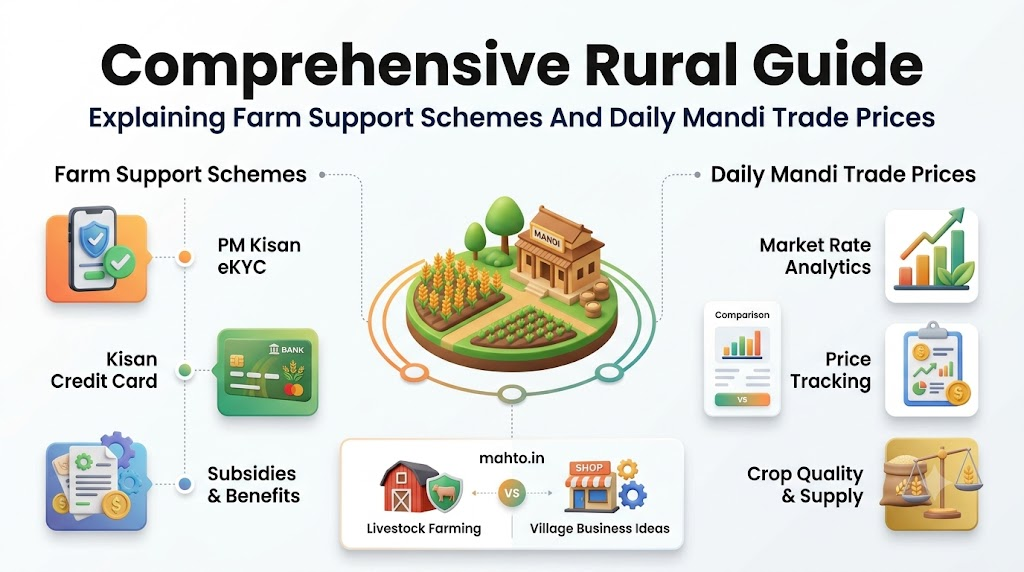
Introduction
Farming gives food to everyone across the country. Yet, many village growers struggle to find clear advice today. Complex government papers and heavy technical words confuse people. So, simple and clear guidance matters greatly for village homes. Farmers need honest facts about seeds, water, money, and crops. Clear words help families make safe choices every day. MAHTO.IN works as a helpful guide for rural families. The platform shares honest facts in simple, clean language. Village youths, farm owners, and women learn useful skills here. You can discover smart ways to grow your farm income. Readers explore new ideas without reading tough textbooks or confusing legal papers. Also, you learn how to protect hard-earned crop profits. Good knowledge builds strong fields and happy families every single season.
Simple Farming Help for Everyday Needs
Every farmer faces new questions with every change of season. You need to know which seeds fit your soil type best. You also need fast details on crop loan dates and prices. Daily mandi rates change quickly in busy markets. So, farmers must track crop values to avoid selling cheap. Animals need clean water, good feed, and safe shelter. Rural entrepreneurs also look for ways to earn extra money at home. Finding clear answers in one place saves time and travel. This is why mahto.in serves rural communities with easy guides. The platform explains complex farm tasks in plain, everyday words. Now, village families can read guides without stress. You gain fresh confidence to run your fields every week.
What MAHTO.IN Offers
The website mahto.in is a Hindi-first rural knowledge platform for everyone. It serves village families, growers, and small rural shop owners. The platform shares easy crop guides, livestock tips, and business models. It also shares regular mandi price updates and local weather news. Readers find plain updates on major central and state farm programs. Village youth discover fresh ways to build small family trades. The website breaks hard rules down into small, clear steps. Because the words stay simple, anyone can follow the practical ideas. You do not need big degrees to read the useful guides. Instead, you get direct steps to help your daily village work. The platform cares about honest, practical progress for all rural people.
Main Topics Farmers Can Find
Village life connects land, animals, market stalls, and local support offices. MAHTO.IN gathers all these important areas into simple reading sections. Readers find clear steps to improve soil and care for animals. You also find practical ways to check market rates before traveling. The table below lists the major learning topics available on the platform.
| Topic Section | Key Focus Area | What Readers Learn |
| Crop Farming | Seeds, soil, and crops | Learn easy steps to grow healthy plants |
| Government Benefits | Official welfare schemes | Learn rules, papers, and safe application steps |
| Livestock Care | Cows, goats, and birds | Learn basic animal care, feed, and sheds |
| Mandi Rates | Daily crop market values | Learn how to check and compare local crop prices |
| Rural Trade | Small village business | Learn practical plans to start local village work |
Farming Information in Hindi
Good crops start with healthy soil and clean farm water. Many official books use tough English that village growers do not speak. Farmers need farming information in Hindi to understand every task clearly. Hindi guides explain how to test your soil before planting seeds. They show you how to pick quality seeds from trusted shops. You also learn how to water your field without wasting drops. Pests, which are tiny bugs that eat plants, hurt crop yield. Hindi guides teach you how to spot these bugs early. Then, you can use safe remedies to stop crop damage quickly. Clear native language makes modern farm science easy for every family.
Government Schemes for Farmers
The government runs many support programs to help village growers succeed. Yet, many small growers miss out because papers look too hard. MAHTO.IN breaks down major government schemes for farmers with simple instructions. Readers learn about identity papers, land records, and local bank rules. You see the exact age rules and land size limits clearly. You also learn how to avoid common mistakes on official forms. A small spelling error on a form can stop your help. But simple checklists help you submit the right papers the first time. Rules change often, so you must verify details at local offices. Staying updated ensures your family receives every valid benefit on time.
PM Kisan eKYC and Kisan Credit Card
Two major welfare services help small growers manage their seasonal costs. The PM Kisan eKYC process confirms a farmer’s identity using Aadhaar numbers. You must link your active mobile phone number to your bank account. Doing this check stops payment delays for your yearly cash support. Next, the Kisan Credit Card gives growers low-interest bank loans for crops. Growers use this loan money to buy seeds, fuel, and fertilizers. You must show clean land papers and identity cards to your banker. Never pay money to random agents who promise quick bank approvals. Always check with real bank managers or official government portals before applying.
How to Check Mandi Prices
A mandi is a local government crop market where buyers gather. Knowing how to check mandi prices helps you earn fair money. Crop values rise and fall every day based on several things. If many farmers bring potatoes on one day, the price drops. But if few bags arrive, buyers pay higher rates for quality. Good crop quality and clean grains always attract better buying bids. Long transport distances can also eat into your crop sale money. So, smart farmers compare prices across two or three nearby towns. You can use simple digital tools or rural websites to track rates. Then, you choose the best day and market to sell your harvest.
How to Grow Paddy
Rice feeds millions, and knowing how to grow paddy brings good income. First, plow your field well to make the dirt soft and level. Add aged cow dung to the soil to feed the earth naturally. Next, select strong, certified paddy seeds from a verified village shop. Soak the seeds in water and raise small green seedlings first. After four weeks, move the healthy seedlings into your wet, muddy field. Keep shallow standing water in the field to stop wild grass weeds. Check your green leaves every week for bad bug attacks. Drain the field water ten days before the full harvest begins. Finally, cut your golden crop on dry, sunny days for clean grains.
How to Start Goat Farming
Goat farming works well for village families with small open plots. Beginners learning how to start goat farming should begin with small herds. Four female goats and one healthy male goat make a safe start. Build a simple wooden or bamboo shed with a dry floor. Goats hate wet floors because damp ground causes foot rot diseases. Feed your goats green grass, dry straw, and clean fresh water. Pick strong local breeds because local goats survive hot weather much better. Talk to a village animal doctor about routine vaccine shots early. Keep a small notebook to write down feed costs and medicine expenses. Then, sell mature goats directly to local buyers during festival seasons.
Village Business Ideas
Families can earn extra cash outside of standard crop harvest seasons. Exploring practical village business ideas helps build steady family savings over time. Starting a small dairy stall with two milk cows brings daily cash. A backyard poultry unit for fresh country eggs requires very little land. Tree nurseries that sell fruit saplings also earn steady seasonal money. You can also offer custom tractor plowing services to your neighbors. Simple food processing, like grinding spices or packaging flour, works nicely too. But always study your local village demand before you spend any savings. Count your machine, power, and transport costs with great care first.
How to Start Organic Farming
Organic farming means growing food crops without using artificial chemical sprays. Farmers who want to know how to start organic farming must begin slowly. Do not change your entire farm land into organic soil all at once. Begin with one small field corner to practice and learn the steps. Make your own rich compost using dry leaves and animal dung. Use neem leaf water sprays to protect young plants from bad insects. Rotate your crops each season so your farm soil stays naturally strong. Organic farming takes hard work, and results take two or three seasons. Also, real organic certificate papers require careful checks and time from officials.
Livestock Farming Information
Farm animals give families milk, meat, eggs, and rich field compost. Honest livestock farming information helps owners keep their animals safe and healthy. Every farm animal needs clean drinking water and a clean, airy shed. Damp sheds make cows and goats sick with coughing and fever. Feed your animals a balanced mix of green fodder and dry straw. Clean animal sheds every morning to stop flies and bad skin bugs. Keep a written record of milk yields and breeding dates in notebooks. Also, call the local animal hospital when an animal stops eating feed. Planning your animal care lowers medical bills and protects your family investment.
Real-Life Scenarios
- Ramesh Fixes His PM-Kisan Status: Ramesh did not receive his government money for four long months. He visited a cyber cafe and checked his details on a phone screen. He discovered his Aadhaar card did not match his bank account number. He updated his phone number and completed his identity check online. Within two weeks, his pending installment arrived safely in his bank account.
- Sunita Starts a Backyard Poultry Unit: Sunita had empty yard space behind her small village home. She bought thirty country chicks and built a clean wooden chicken coop. She fed them kitchen vegetable waste, cracked corn grains, and clean water. After five months, she began selling fresh country eggs to local village teachers. Her family now earns steady weekly cash to pay for school books.
- Manoj Checks Mandi Rates Before Selling: Manoj grew five quintals of fresh green chili peppers on his land. A local village trader offered him thirty rupees per kilogram at his farm gate. Manoj checked online market prices and found forty-five rupees in the next town market. He paid five rupees for a shared tempo ride and sold there. He earned far more profit by checking market prices before selling his produce.
Common Mistakes to Avoid in Rural Trade
- Skipping Soil Testing: Farmers often buy bags of chemical fertilizers without testing their field dirt. This wastes good money and burns the soil. Test your soil at a local lab every three years to buy only needed nutrients.
- Using Unverified Seed Bags: Buying cheap seeds from loose market bags often leads to empty crop heads. Buy only certified, sealed seed bags from registered government shops.
- Missing Animal Vaccines: Waiting until a dairy cow falls sick brings huge doctor bills. Keep a strict chart for animal vaccines and follow it every single year.
- Selling to the First Middleman: Many growers sell crops quickly without checking real market values first. Always compare prices across three nearby mandi yards before you agree to sell.
- Ignoring Record Books: Small business owners often forget to track their daily cash spending. Write down every seed, feed, and fuel purchase in a notebook daily.
- Applying for Schemes Without Paper Checks: Filling government scheme forms with wrong name spellings leads to fast rejection. Match your bank name with your Aadhaar card before you apply.
- Taking Unregistered Loans: Borrowing money from private lenders at huge interest rates creates bad debt traps. Use low-interest bank crop loans through valid official credit cards instead.
- Shifting to Organic Farming Too Fast: Changing all farm land to organic practices overnight can lower your harvest yield. Change one small plot first, learn natural composting methods, and expand slowly over time.
Helpful Rural Services and Tools
Planning farm work with reliable tools saves money and prevents waste. Farmers can compare their daily work using simple, clear reference guides. The table below outlines basic rural services and how to use them safely.
| Rural Service | Main Purpose | Where to Access | Best Practice |
| Soil Health Card | Tests soil nutrients | Local farm center | Test soil every three years |
| Bank Crop Loan | Cheap seasonal credit | Nationalized banks | Repay loan on time after harvest |
| Mandi Price App | Shows crop prices | State agriculture portal | Check rates before hiring transport |
| Animal Hospital | Vaccinates farm herds | Block veterinary clinic | Get free seasonal vaccine shots |
How MAHTO.IN Can Help
Finding simple, honest guidance should never feel like a hard chore. The website mahto.in brings all vital village topics into one easy space. Readers can read clean farming guides, livestock advice, and fresh village business plans. You can follow clear steps to check market prices and complete government forms. The platform uses everyday words so that everyone in the family understands. You do not need to struggle with heavy jargon or hard language anymore. By reading practical articles, village growers plan their work with total confidence. Visit mahto.in to explore helpful rural articles and make smart farm decisions today.
Frequently Asked Questions
1. What kind of content does MAHTO.IN share?
MAHTO.IN shares easy rural guides on farming, livestock care, government welfare programs, and village trades. The platform also covers mandi crop prices, weather advice, and rural development news. All guides use simple Hindi so that village families can understand the ideas clearly. It helps readers learn practical methods without confusing technical jargon.
2. Why is farming information in Hindi useful for growers?
Many village growers do not read English easily. Complex words in technical books often confuse readers. Simple Hindi crop guides explain soil prep, seed care, irrigation, and pest control in plain terms. This allows farmers to use real scientific advice directly in their home fields with ease.
3. What is the main purpose of the Kisan Credit Card?
The Kisan Credit Card gives farmers short-term bank loans at very low interest rates. Farmers use this money to buy quality seeds, fertilizers, tractor fuel, and animal feed. It protects village growers from borrowing cash from high-interest money lenders. Farmers repay the loan after selling their crops.
4. How can a farmer complete the PM Kisan eKYC process?
A farmer can complete this check online through the official portal using Aadhaar and mobile OTP. If your phone is not linked to Aadhaar, visit a local public service center. There, you can complete the identity check using your fingerprint. Doing this ensures your cash benefits arrive without delays.
5. Why do mandi prices change every single day?
Mandi rates change based on daily supply, buyer demand, crop quality, and weather conditions. If thousands of crop sacks enter the market at once, prices drop fast. When supplies run low, buyers pay more money for clean produce. Distance and transport costs also affect the final price you receive.
6. What are the basic steps to grow paddy successfully?
Paddy growing starts with plowing soil and adding aged organic cow manure. Next, growers raise green seedlings in a nursery bed before transplanting them into flooded fields. Keep shallow water in the field to stop weed growth. Treat bug attacks early, drain field water before harvest, and cut crops on dry days.
7. How should a beginner start goat farming?
A beginner should start small with four female goats and one male goat. Build a clean, dry, well-ventilated shelter with raised wooden slats. Feed your goats green grass, dry leaves, and clean water daily. Always get your animals vaccinated by a vet and track your costs in a notebook.
8. What are some good village business ideas for rural youth?
Rural youth can start small dairy units, poultry farms, tree nurseries, or spice-grinding shops. Offering tractor rentals or farm tool repair services also works very well in farming areas. Always study local buyer needs, calculate your equipment costs, and start small to keep your money safe.
9. How do you start organic farming without big crop losses?
Do not change your entire farm land into an organic field all at once. Begin with a small test plot of land to learn the composting process. Make rich compost with cow dung and spray neem water to control insects. Rotate crops each year to keep your soil fertile and strong.
10. Where can readers find reliable livestock farming information?
Readers can find clear livestock guides on mahto.in, along with government animal health centers. These guides cover daily animal nutrition, clean housing, milk hygiene, and routine seasonal vaccines. Reading practical care guides prevents animal sickness and helps owners run a profitable home dairy or goat herd.
11. Can MAHTO.IN guarantee bank loan or scheme approvals?
No, the platform does not guarantee loan sanctions or government scheme payments. It only provides educational guides, document checklists, and application steps. Every bank and government department follows its own rules. You must check official government portals or visit local bank branches to confirm current terms.
12. How does checking mandi prices online save farmers money?
Checking prices online shows you what buyers pay in several nearby town markets. If your local trader offers a very low rate, you can take your crop elsewhere. This helps you avoid unfair middleman cuts and covers your transport expenses. You pick the best market to sell your hard-earned harvest.
Conclusion
Clear rural guidance helps farm families plan their work, save money, and make smart choices every season. When farmers understand seeds, weather, and animal health, crop yields grow much better. Simple explanations also take the fear out of official bank forms and government programs. You do not need to rely on guesswork or bad rumors in the village square anymore. Platforms like mahto.in make practical knowledge open, honest, and easy for every rural home to read. As you learn new methods, test them carefully and verify changing rules at local offices. Honest learning helps your farm stay green, strong, and profitable all year long.
Leave a Reply